
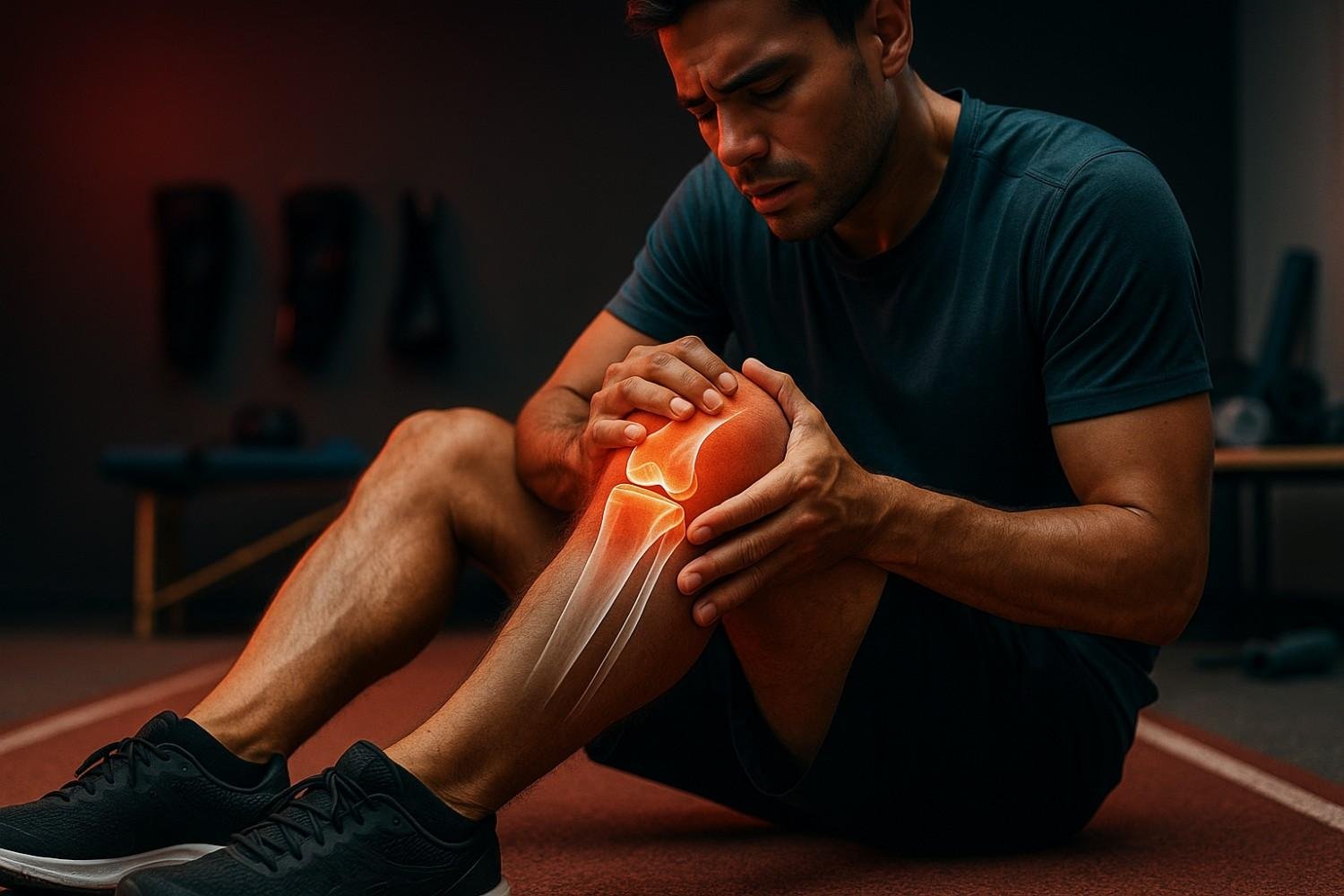
Hello, I’m Dr. Shashikanth Rasakatla. At my sports injury clinic in Karimnagar, one of the most common complaints I hear from active individuals is a nagging, persistent pain in the front of the knee. This condition, widely known as “runner’s knee,” is medically termed Patellofemoral Pain Syndrome (PFPS).
Runner’s knee, or Patellofemoral Pain Syndrome (PFPS), is a condition characterized by a dull, aching pain around or behind your kneecap (patella). It is often triggered by activities that repeatedly stress the knee joint, like running or climbing stairs.
While its name points to runners, this issue affects a wide range of athletes and active people, from weekend joggers to seasoned marathoners and players of sports that involve jumping and squatting. It can be frustrating and sideline you from the activities you love. But the good news is that in the vast majority of cases, it is both preventable and treatable without surgery.
In this comprehensive guide, I will walk you through what is really happening inside your joint, the underlying causes that often go overlooked, and a detailed, actionable plan to both prevent and treat this common ailment. My goal is to empower you with the knowledge to keep your knees healthy so you can continue to lead an active, pain-free life.
Understanding Runner’s Knee (Patellofemoral Pain Syndrome)
To effectively address runner’s knee, we first need to understand what it is and what it is not. Many patients worry that their knee pain means they have “worn out” their cartilage, but that is usually not the case with PFPS.
What Exactly Is Happening Inside Your Knee?
The pain from runner’s knee does not come from the cartilage on the underside of your kneecap itself. In fact, that cartilage has no nerves and cannot directly feel pain. Instead, the discomfort arises when nerves in the surrounding soft tissues, like the tendons, the fat pad beneath the patella, and the synovial tissue lining the joint, become irritated and inflamed.
This irritation typically happens when your kneecap, or patella, does not track smoothly in its groove on the thigh bone (femur) as you bend and straighten your leg. Think of it like a train that is slightly off its tracks. This “malalignment” causes the kneecap to rub against the sides of the groove, creating pressure and stressing those sensitive surrounding tissues. While a condition called chondromalacia patella (the softening of kneecap cartilage) can sometimes accompany PFPS, it is the irritation of the soft tissues that sends the pain signals to your brain.
Who Is at Risk for Runner’s Knee?
While the name singles out runners, anyone can develop PFPS. I regularly see this condition in cyclists, hikers, soccer players, and people who do a lot of squatting for their job or at the gym.
Several factors can increase your risk:
- Gender: Women are twice as likely as men to develop runner’s knee. This is often attributed to the fact that women typically have a wider pelvis, which can increase the angle of the thigh bone from the hip to the knee, affecting how the kneecap tracks.
- Age: The condition is most common in adolescents and young adults, largely due to high activity levels and growth-related changes. In older adults, knee pain is more often caused by arthritis.
- Previous Injury: A past trauma to the knee, such as a dislocation or fracture, can predispose you to developing PFPS later on.
The Root Causes: Why Does Your Knee Hurt?
Runner’s knee is rarely caused by a single event. It is an overuse injury that develops over time from a combination of factors. Identifying the root cause is the key to effective treatment and long-term prevention.
Training Errors: The “Too Much, Too Soon” Problem
The most common trigger I see in my practice is simply asking too much of your knees without giving your body time to adapt. This often falls into a few categories:
- Sudden Increase in Activity: Rapidly increasing your running mileage, frequency, or intensity is a classic recipe for PFPS. Your muscles, tendons, and bones need time to adapt to new loads.
- Changes in Terrain: Switching from a soft surface like a trail to a hard one like concrete pavement can dramatically increase the impact forces on your knees.
- Improper Equipment: Worn-out running shoes that have lost their cushioning and support can fail to absorb shock properly, transferring that stress directly to your joints.
Why Focusing Only on Your Knees is a Mistake
This is one of the most important points I stress to my patients. Your knee pain is often a symptom of a problem that starts elsewhere in the body. The knee joint is caught in the middle, taking the blame for weaknesses or imbalances above and below it.
Most experts agree that the primary biomechanical driver of runner’s knee is poor control at the hip. Specifically, weakness in the hip abductor and gluteal muscles is a major contributor. When these muscles are weak, your thigh bone can rotate inward and your knee can collapse toward the midline when you run, squat, or land from a jump. This movement pattern, known as dynamic valgus, throws the kneecap off its track and creates the irritation that leads to pain.
Other contributing factors in this kinetic chain include:
- Weak Quadriceps: The muscles at the front of your thigh help control the kneecap’s position. If they are weak or imbalanced, they cannot stabilize the patella effectively.
- Tight Muscles: Tightness in the hamstrings, Achilles tendons, or the iliotibial (IT) band can pull on the knee and disrupt its normal mechanics.
- Foot Problems: Issues like flat feet or overpronation (where the foot rolls excessively inward) can change the alignment of your entire leg, putting abnormal stress on the knee.
Recognizing the Symptoms: Is It Runner’s Knee?
The symptoms of PFPS are usually quite distinct and tend to appear gradually. If you’re experiencing any of the following, it’s a good indication that you may be dealing with runner’s knee.
Key Warning Signs to Watch For
The hallmark symptom is a dull, aching pain at the front of the knee, which can be felt around, behind, or under the kneecap. This pain is typically aggravated by specific activities:
- Running, jumping, or squatting.
- Walking up or down stairs (especially down).
- Sitting for long periods with your knees bent, like in a car or at a desk. Many people notice the pain when they stand up after being seated for a while. This is often called the “movie theater sign”.
Other Telltale Clues
In addition to pain, you might also notice:
- Crepitus: A popping, grinding, or crackling sensation in the knee when you move it.
- Tenderness: The area around your kneecap may be tender to the touch.
- A feeling of weakness or that the knee might “give way”.
| Symptom / Question | Common Triggers & Characteristics |
| Do you feel a dull, aching pain at the front of your knee? | Pain is often located around or behind the kneecap and typically begins gradually. |
| Does your pain worsen with specific activities? | Pain increases during running, jumping, squatting, or going up and down stairs. |
| Does your knee hurt after sitting for a long time? | Discomfort arises after prolonged periods with bent knees (e.g., in a car, at a desk). |
| Do you hear or feel noises in your knee? | A rubbing, grinding, or crackling sensation (crepitus) may occur when bending the knee. |
| Is your kneecap sensitive? | The area around the kneecap may be tender to the touch. |
| Does your knee feel unstable? | Some individuals report a feeling of weakness or that the knee might “give way.” |
Your Proactive Prevention Plan: How to Keep Your Knees Healthy
Prevention is always better than cure. By adopting a smart, holistic approach to your training and conditioning, you can significantly reduce your risk of developing runner’s knee. This plan is built on four essential pillars.
Build a Bulletproof Foundation: Strength and Flexibility
This is the most critical part of any prevention strategy. As we discussed, runner’s knee is often a consequence of weak hips. Therefore, your exercise program must focus on strengthening the entire chain of muscles that supports your legs.
- Hip and Glute Strengthening: This is non-negotiable. Strong glutes stabilize your pelvis and prevent your knee from collapsing inward during activity.
- Quadriceps Strengthening: Strong quads help stabilize the patella. The key is to perform exercises in a pain-free range of motion.
- Flexibility: Tight muscles pull on the knee joint. Regular stretching of the hamstrings, quads, and calves is essential for maintaining good mobility.
Here are some foundational exercises to get you started:
| Exercise Name | Target Muscle Group | Purpose / Benefit | Instructions & Repetitions |
| Clamshell | Gluteus Medius (Hip Abductors) | Stabilizes the pelvis to prevent the knee from collapsing inward during activity. | Lie on your side with knees bent and stacked. Keeping feet together, lift the top knee toward the ceiling without rocking your pelvis back. Hold briefly and lower slowly. (3 sets of 15 reps per side). |
| Side Leg Raise | Gluteus Medius (Hip Abductors) | Strengthens the outer hip muscles to improve stability during single-leg stance. | Lie on your side with legs straight and stacked. Lift the top leg toward the ceiling, keeping it straight and without leaning backward. Lower slowly. (3 sets of 15 reps per side). |
| Glute Bridge | Gluteus Maximus, Hamstrings | Strengthens the primary hip extensors, which power running and support pelvic alignment. | Lie on your back with knees bent, feet flat on the floor. Lift your hips toward the ceiling until your body forms a straight line from shoulders to knees. Squeeze glutes at the top. Hold and lower slowly. (3 sets of 15 reps). |
| Wall Squat | Quadriceps, Glutes | Strengthens the major leg muscles in a controlled, supported manner that limits knee strain. | Stand with your back against a wall, feet shoulder-width apart. Slide down until your thighs are at a 45-degree angle. Do not go deeper. Hold for 20-30 seconds. (3 sets). |
| Quadriceps Stretch | Quadriceps | Improves flexibility in the front of the thigh, reducing tension on the patella. | Standing, hold onto a support for balance. Grab your ankle and gently pull your heel toward your buttock, keeping your knees together. Feel the stretch in the front of your thigh. Hold for 30 seconds. (Repeat 2-3 times per side). |
| Hamstring Stretch | Hamstrings | Lengthens the muscles on the back of the thigh, which can pull on the knee when tight. | Lie on your back and loop a towel around one foot. Gently pull the leg up, keeping it as straight as possible, until you feel a stretch. Hold for 30 seconds. (Repeat 2-3 times per side). |
The One Running Form Cue That Changes Everything
If I could give runners only one piece of advice to protect their knees, it would be this: Focus on landing with your foot underneath your body, not out in front of it.
Many runners unknowingly “overstride,” which means their foot lands far ahead of their center of mass, often with a straight, locked knee. This acts like a brake with every step, sending a massive shockwave up the leg and directly into the knee joint.
To fix this, concentrate on taking shorter, quicker steps. A study from the British Journal of Sports Medicine highlighted how factors like overstriding can increase the stress on the knees. Increasing your cadence (the number of steps you take per minute) is a highly effective way to reduce overstriding. Most experts agree that aiming for a cadence of around 170-180 steps per minute encourages a lighter, lower-impact foot strike.
| Instead of This… (Common Mistake) | Do This… (Correct Technique) |
| Landing with a straight leg far in front of your body (Overstriding). | Focus on landing with your foot underneath your hips with a soft, bent knee. |
| Taking long, slow, heavy steps (Low Cadence). | Increase your step rate (cadence) to 170-180 steps per minute. Think “quick, light feet”. |
| Bending forward at the waist. | Maintain a tall posture with a slight forward lean from the ankles, not the waist. |
| Running with feet splayed out to the sides. | Keep your feet pointing forward in the direction you are running to avoid twisting forces on the knee. |
Your Gear Matters: Choosing the Right Shoes and Surfaces
Your running shoes are your first line of defense against the repetitive impact of running. They play a critical role in shock absorption and maintaining proper foot alignment.
- Get the Right Support: If you have issues like overpronation or flat feet, a stability shoe can help prevent your foot from rolling inward and keep your entire leg in better alignment. I highly recommend visiting a specialty running store where staff can analyze your gait and recommend a shoe that matches your foot type.
- Replace Them Regularly: The cushioning in shoes breaks down over time. As a rule of thumb, replace your running shoes every 400-500 miles to ensure they are still providing adequate protection.
- Choose Your Surface: Whenever possible, try to run on softer surfaces like dirt trails, grass, or a running track. These surfaces are more forgiving and absorb more impact than concrete or asphalt.
Train Smarter, Not Harder: The Principles of Progression
A smart training plan is your best defense against overuse injuries.
- Follow the 10% Rule: This is a well-known guideline that suggests you should not increase your weekly running mileage by more than 10% from the previous week. While it’s not a rigid law, it’s a safe principle. A 2014 study in the Journal of Orthopaedic & Sports Physical Therapy found that runners who increased their mileage by more than 30% over two weeks had a significantly higher injury rate.
- Always Warm-Up: Never start a run on cold muscles. Begin with 5-10 minutes of light aerobic activity like brisk walking or slow jogging. Follow this with dynamic stretches like leg swings, butt kicks, and walking lunges to prepare your muscles for the work ahead.
- Do not Skip the Cool-Down: After your run, allow your body to transition back to a resting state with 5-10 minutes of walking. This is the perfect time for static stretching. Hold each stretch for 20-30 seconds, focusing on your quads, hamstrings, calves, and hips.
I Already Have Knee Pain: What Are My Treatment Options?
If you’re currently experiencing knee pain, the first step is to reduce the inflammation and give the tissues time to heal.
First-Line At-Home Care
For most mild to moderate cases, you can start with the RICE method :
- Rest: Stop the activities that are causing the pain. This does not mean complete inactivity; you can switch to low-impact exercises like swimming or cycling.
- Ice: Apply a cold pack to your knee for 15-20 minutes, several times a day, to help reduce pain and swelling.
- Compression: Use an elastic bandage to gently wrap the knee to help control swelling.
- Elevation: When you’re sitting or lying down, prop your knee up on pillows so it’s above the level of your heart.
Over-the-counter anti-inflammatory medications like ibuprofen can also be helpful for short-term pain relief.
When to Seek Professional Help: Finding the Best Knee Pain Treatment in Karimnagar
You should see a doctor if your pain does not improve after a few weeks of at-home care, if the pain gets worse, or if it starts to interfere with your daily activities.
As an orthopedic specialist, my approach to providing the best knee pain treatment in Karimnagar is to first get an accurate diagnosis and then create a personalized rehabilitation plan. Professional pain management for sports injuries in Karimnagar involves more than just masking the symptoms; it’s about fixing the underlying cause.
The cornerstone of professional treatment is physical therapy. A skilled therapist will guide you through a specific program of strengthening and stretching exercises tailored to your unique imbalances. They can also use techniques like taping or recommend supportive braces or shoe inserts (orthotics) to help stabilize your kneecap as you recover.
It’s important to know that surgery is very rarely needed for runner’s knee. The vast majority of patients find complete relief through a dedicated, conservative treatment plan.
The Takeaway: Your Path to Pain-Free Running
Runner’s knee can be a significant obstacle, but it does not have to be a permanent one. By understanding that knee pain is often a signal of weakness or imbalance elsewhere, particularly in the hips, you can shift your focus from simply treating the symptom to fixing the root cause.
A proactive approach that combines targeted strengthening, proper running form, smart training principles, and appropriate footwear is your most powerful tool for both prevention and recovery.Do not let knee pain dictate your life. If you’re struggling and at-home care is not providing relief, it’s time for a professional evaluation. Schedule your orthopedic doctor appointment in Karimnagar at our sports injury clinic in Karimnagar today. Together, we can create a personalized plan to get you back on your feet and moving toward a pain-free future.

Dr. Shashikanth Rasakatla is a leading Orthopedic Surgeon, Joint Replacement Specialist, and the founder of the Sri Shashikanth Pain Management and Sports Injuries Centre in Karimnagar. He is passionate about using advanced, minimally invasive techniques to help patients overcome pain and return to an active lifestyle. Through his writing, he aims to provide clear, trustworthy information on joint health and sports medicine.
Leave a Reply