
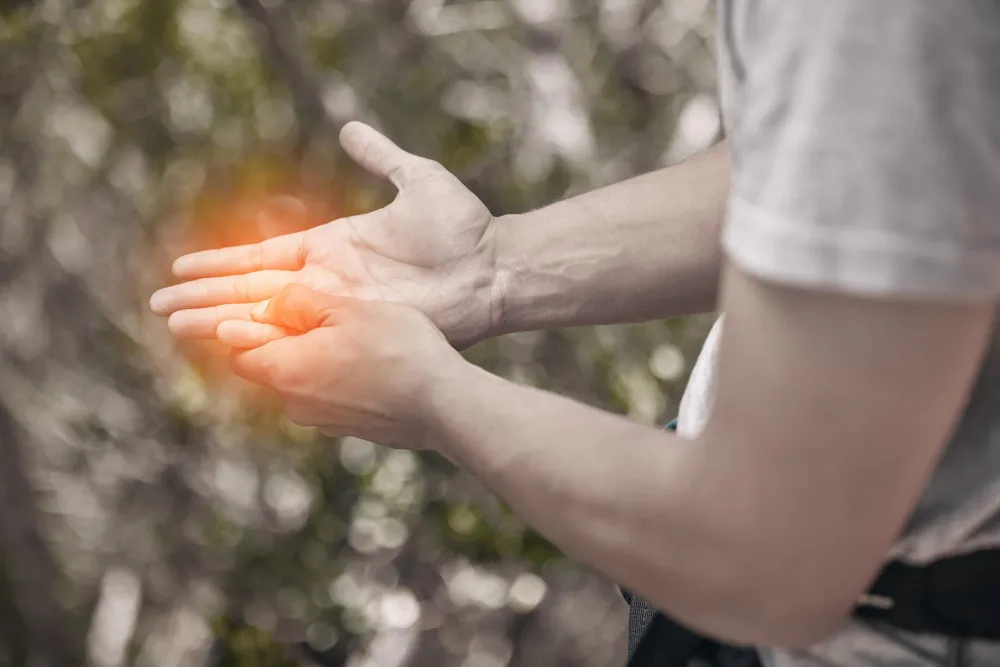
Your fingers are among the most used joints in your body , every single day. When joint pain of fingers begins to interfere with simple tasks like holding a pen, typing, or opening a bottle, it is a signal your body is asking for attention. At Shashikanth Orthopedic Hospital in Karimnagar, we see and treat finger joint problems regularly, helping patients restore function and live pain-free.
This guide covers everything you need to know about finger joint pain , its common causes, warning signs, diagnosis, and treatment options available today.
What Is Joint Pain of Fingers?
Finger joints connect the bones of your hand through a complex system of cartilage, tendons, ligaments, and fluid-filled sacs called bursae. Joint pain of fingers occurs when any part of this system becomes inflamed, damaged, or worn down.
Pain may be felt at the knuckles (MCP joints), the middle joints (PIP joints), or the joints closest to your fingertip (DIP joints). It can affect one finger or multiple fingers simultaneously, and may appear gradually or suddenly after an injury.
Common Causes of Joint Pain in Fingers
- Osteoarthritis (OA)
The most common cause of finger joint pain in adults above 40. Osteoarthritis occurs when the protective cartilage between finger joints gradually wears away. You may notice bony lumps forming near your finger joints, known as Heberden’s nodes (at the fingertip) or Bouchard’s nodes (at the middle joint). The pain tends to worsen in the morning or after periods of inactivity.
- Rheumatoid Arthritis (RA)
Unlike osteoarthritis, rheumatoid arthritis is an autoimmune condition where the body’s immune system attacks the joint lining. RA typically affects multiple finger joints symmetrically , meaning both hands are often affected. Morning stiffness lasting more than 30 minutes is a classic symptom. Early diagnosis and treatment are critical to prevent permanent joint deformity.
- Gout
Gout is caused by a build-up of uric acid crystals in the joints. While it more commonly affects the big toe, it can cause sudden, severe joint pain in fingers, usually starting with intense pain, redness, and swelling that appears without warning , often at night.
- Trigger Finger
Trigger finger (stenosing tenosynovitis) occurs when the tendon sheath surrounding the finger tendon becomes inflamed, making the finger lock or catch when bent. You may feel a clicking sensation, stiffness, or a tender lump at the base of your affected finger. It is more common in people with diabetes and those performing repetitive gripping tasks.
- De Quervain’s Tenosynovitis
This condition causes pain in the thumb side of the wrist and base of the thumb. It is common in new mothers (due to repetitive lifting), and people who use mobile phones or keyboards heavily. Moving the thumb causes pain that can radiate along the finger and wrist.
- Injury or Trauma
Fractures, dislocations, or ligament injuries from sports, falls, or accidents can cause acute finger joint pain. Even minor injuries that go untreated can lead to chronic pain, stiffness, and arthritis later if not properly managed.
- Psoriatic Arthritis
People with psoriasis (a skin condition) can develop psoriatic arthritis, which causes finger joints to become swollen and painful. A characteristic sign is ‘sausage fingers’ (dactylitis) where the entire finger swells up.
Symptoms to Watch Out For
Joint pain of fingers may present differently depending on the underlying cause. Common symptoms include:
- Persistent aching or throbbing pain in one or more finger joints
- Swelling, redness, or warmth around the joint
- Morning stiffness that eases as the day progresses
- Reduced grip strength or difficulty pinching
- Clicking, locking, or catching sensation while bending the finger
- Visible deformity or bony lumps near the joints
- Numbness or tingling (which may suggest nerve involvement)
When Should You See an Orthopedic Doctor?
Many people dismiss finger joint pain as ‘normal ageing.’ But ignoring it can lead to permanent joint damage. You should consult a doctor if:
- Pain has persisted for more than 2–3 weeks
- Swelling does not reduce despite rest and home care
- You have difficulty with everyday tasks (writing, cooking, driving)
- Pain wakes you up at night
- You notice visible deformity in any finger joint
- Pain followed a sports injury or fall
How Is Finger Joint Pain Diagnosed?
At Shashikanth Orthopedic Hospital, our evaluation begins with a thorough clinical examination. Dr. Shashikanth Rasakatla will assess joint mobility, tenderness, swelling patterns, and grip strength. Depending on findings, additional investigations may include:
- X-Ray: Identifies joint space narrowing, bony changes, and fractures.
- Blood Tests: Help diagnose rheumatoid arthritis, gout (uric acid levels), and inflammatory markers (ESR, CRP).
- Ultrasound / MRI: Provides detailed images of soft tissues, tendons, and cartilage to identify inflammation or tears.
Treatment Options for Joint Pain of Fingers
Non-Surgical Treatments
Most cases of finger joint pain can be managed without surgery. These include:
- Rest & Splinting: Immobilising the affected joint gives inflamed tissues time to heal.
- Medications: Anti-inflammatory drugs (NSAIDs), disease-modifying drugs (DMARDs for RA), or urate-lowering drugs (for gout).
- Physiotherapy: Targeted exercises to restore joint flexibility, strengthen surrounding muscles, and improve hand function.
- Corticosteroid Injections: Provide fast relief from pain and inflammation in conditions like trigger finger and arthritis.
- PRP (Platelet-Rich Plasma) Therapy: At Shashikanth Orthopedic Hospital, we offer PRP therapy , an advanced regenerative treatment that uses your body’s own growth factors to reduce inflammation and promote healing in arthritic joints.
Surgical Treatments
When conservative measures fail, surgical options may be considered:
- Trigger Finger Release: A minor procedure that releases the constricted tendon sheath, restoring smooth finger movement.
- Joint Replacement (Arthroplasty): For severely damaged finger joints, replacement with an implant can restore function and eliminate pain.
- Joint Fusion (Arthrodesis): The joint bones are permanently fused, providing stability and pain relief , particularly effective for the DIP joints.
- Minimally Invasive (Keyhole) Surgery: Where possible, Dr. Shashikanth uses arthroscopic techniques to reduce recovery time and post-operative discomfort.
Home Care Tips for Finger Joint Pain
- Apply ice packs for 15–20 minutes for acute pain or inflammation
- Use warm compresses or paraffin wax baths for stiffness in chronic conditions
- Perform gentle finger stretching and mobility exercises daily
- Avoid repetitive tasks that strain the fingers , use ergonomic tools
- Maintain a healthy weight , excess body weight can worsen inflammatory arthritis
- Eat an anti-inflammatory diet (turmeric, omega-3 rich foods, fresh vegetables)
- Stay hydrated to keep joints lubricated
Why Choose Shashikanth Orthopedic Hospital for Finger Joint Pain?
Shashikanth Orthopedic Hospital in Karimnagar is Telangana’s trusted centre for orthopedic and joint pain care. Here’s why patients across Karimnagar, Warangal, Nizamabad, and Hyderabad trust us:
- Expert Specialist: Dr. Shashikanth Rasakatla , MBBS, D.Ortho, DNB.Ortho , with advanced fellowship training in arthroscopy, sports medicine, and joint replacement.
- Advanced Diagnostics: Comprehensive in-house imaging and blood work for accurate diagnosis.
- Latest Treatments: From PRP therapy to minimally invasive keyhole surgery, we offer the most advanced care available.
- Personalised Care: Every patient receives an individualised treatment plan tailored to their condition and lifestyle.
- Convenient Location: H No. 3-3-128, Raja Theatre Circle, Doctors Street, Karimnagar , 505001.
📞 Book Your Appointment Today: Call +91 81424 05060 or visit shashikanthorthohospital.com
Frequently Asked Questions (FAQs)
Q: Can finger joint pain be cured permanently?
A: Yes , depending on the cause. Conditions like trigger finger, gout, and injury-related pain can often be fully resolved. Degenerative conditions like osteoarthritis can be effectively managed to restore near-normal function, and in severe cases, joint replacement can provide lasting relief.
Q: Is finger joint pain a sign of arthritis?
A: It can be, but not always. While arthritis is one of the most common causes, finger joint pain can also result from injury, tendon issues, or infections. A proper diagnosis is important before starting any treatment.
Q: What is the best home remedy for finger joint pain?
A: Ice for acute swelling, warm compresses for stiffness, and gentle stretching exercises. However, these are supportive measures , they do not replace medical treatment for underlying conditions.
Q: Does PRP therapy help with finger arthritis?
A: Yes. PRP (Platelet-Rich Plasma) therapy is increasingly used in orthopedics to slow arthritis progression and reduce pain. At Shashikanth Orthopedic Hospital, we offer PRP treatment as part of our comprehensive joint care programme.
Conclusion
Joint pain of fingers should never be ignored. Whether it’s an early sign of arthritis, a sports injury, or an inflammatory condition, early diagnosis and the right treatment plan can prevent further damage and restore full hand function.
At Shashikanth Orthopedic Hospital in Karimnagar, we combine specialist expertise with the latest treatment technology to help you get back to doing what you love , pain-free. Don’t let finger joint pain hold you back.

Dr. Shashikanth Rasakatla is a leading Orthopedic Surgeon, Joint Replacement Specialist, and the founder of the Sri Shashikanth Pain Management and Sports Injuries Centre in Karimnagar. He is passionate about using advanced, minimally invasive techniques to help patients overcome pain and return to an active lifestyle. Through his writing, he aims to provide clear, trustworthy information on joint health and sports medicine.
Leave a Reply