
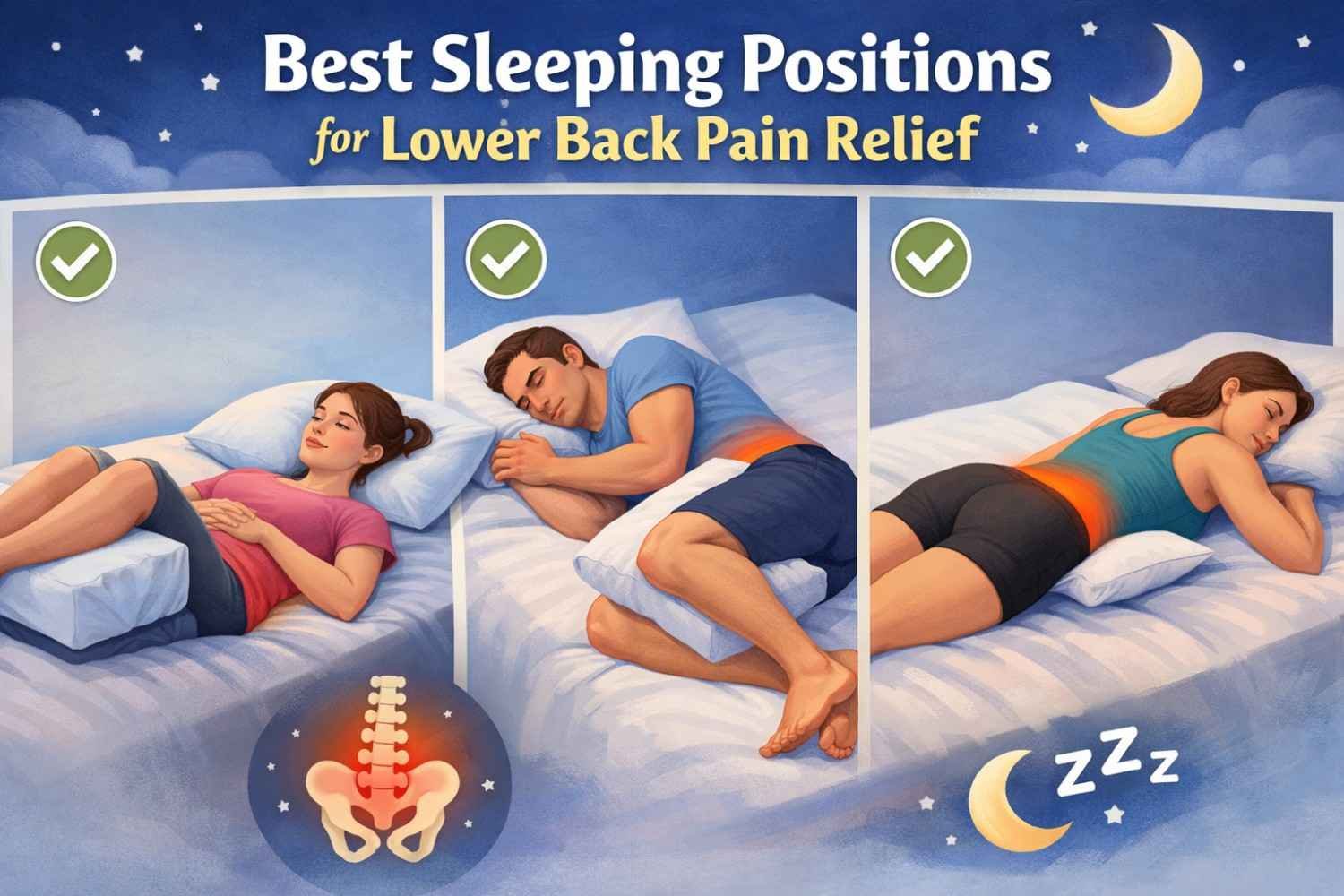
Lower back pain is one of the most common health problems people of all ages face. Whether you work at a computer for long periods, have a physically demanding job, or have an underlying spine issue, sleeping in the wrong posture can silently contribute to the problem. Most people are aware of medication and exercises, but fail to consider one important aspect that can significantly impact the pain in the lower back region – sleeping.
The sleeping posture has a significant impact on the spine and can either relieve or worsen lower back pain. Sleeping in the right posture can help relieve lower back pain. In this comprehensive guide, we will discuss the best sleeping positions to help relieve lower back pain.
Why Sleeping Position is Important for Lower Back Pain Sufferers
When sleeping, the spine should be in its normal position. When one sleeps in an awkward position that distorts the spine, one puts unnecessary pressure on the spine.
Sleeping in an awkward position can result in:
- Increased pressure on the spine
- Muscle stiffness in the morning
- Impaired blood circulation
- Worsening of back problems
- Sleep disruption due to back pain
Sleeping in the right position helps to reduce pressure on the spine and promote healing.
Best Sleeping Positions for Lower Back Pain Relief
1. Sleeping on Your Back with a Pillow Under Your Knees
This is considered one of the best sleeping positions for relieving lower back pain.
When you sleep on your back, you can evenly distribute your body weight. Sleeping on your back and using a pillow to support your knees will help you maintain a natural spine curve and avoid putting pressure on your lower back.
Why is it effective for relieving lower back pain?
- The spine is kept in a neutral position
- Stress is reduced on your lower back discs
- Improves blood circulation
How to sleep on your back and relieve lower back pain:
- Lie flat on your back
- Position a medium-sized pillow behind your knees
- Position a supportive pillow behind your neck
2. Sleeping on Your Side with a Pillow Between Your Knees
Sleeping on your side is another good sleeping position, especially if you do it correctly.
The pillow between your knees helps to stop your upper leg from putting your spine out of alignment.
Why it works:
- Aligns hips, pelvis, and spine
- Takes pressure off one side of the body
- Helps to stop the spine from twisting
How to do it:
- Sleeping on your side
- Knees slightly bent
- Insert a firm pillow between your knees
If you still experience pain, you can also hug a pillow to align your upper body.
3. Fetal Position for Disc Problems
The fetal position can be helpful for people with disc problems.
The advantages of the fetal position are:
- The space between the vertebrae is increased.
- The pressure on the disc is relieved.
- The pressure on the nerves is relieved.
- It is comfortable.
How to do the fetal position:
- Lie on your side.
- Pull your knees towards your chest.
- Maintain the back slightly curved.
- Don’t bend too much, as it will cause stiffness.
4. Reclined Sleeping Position
- This position can be useful for conditions that require a reclined sleeping position, for example, spondylolisthesis and severe back pain.
- A slightly inclined sleeping position can help alleviate some pressure on the spine.
How it works:
- It helps alleviate some of the pressure from the lower back.
- It helps align the spine.
- It helps in breathing and relaxing.
How to do it:
- It can be done by using an adjustable bed or pillows.
- The upper body should be slightly elevated.
- A pillow should be used to support the knees.
Sleeping Positions to Avoid
While it is important to focus on the right sleeping position, it is equally important to avoid harmful ones.
- Sleeping on Your Stomach
- This is the worst position for lower back pain.
Why is it harmful:
- Flattens the natural curve of the spine
- Causes strain on the neck
- Causes strain on muscles and joints
If you cannot avoid sleeping on your stomach, you may place a thin pillow under your pelvis to avoid strain.
Choosing the Right Mattress and Pillow
Your sleeping position will only be effective if you have a mattress and pillow that support your body.
Mattress Tips
- Select a medium-firm mattress
- Avoid soft mattresses that cause sinking
- Replace old mattresses that no longer give support
Pillow Tips
- Use a pillow that supports the alignment of the neck
- Avoid using very high or flat pillows
A proper combination of a mattress and a pillow will enhance the benefits of a good sleeping posture.
More Tips to Help You Sleep Better and Relieve Back Pain
- Establish a Routine Sleeping Schedule
Going to bed and waking up at the same time every day helps the body heal.
- Stretch Gently Before Bed
Stretching the body helps the muscles relax and relieves stiffness.
- Avoid Heavy Meals Before Bed
Not eating before bedtime helps with sleeping and the quality of the sleep.
- Ensure Comfort in the Sleeping Area
The sleeping area should be quiet, dark, and cool to promote proper sleeping.
- Stay Active During the Day
Physical activity strengthens the back and helps relieve back pain.
When to See a Doctor
When your back pain persists despite your efforts to improve your sleep posture, it is a sign of an underlying condition.
You need to seek medical attention if you are experiencing:
- Severe pain
- Pain that is radiating to your legs
- Numbness
- Trouble standing up or walking
At Shashikanth Orthopedic Hospital, patients receive comprehensive evaluation and individualized treatment for back problems.
How Proper Sleep Supports Long-Term Spine Health
Sleep is not just rest; it is also an opportunity for your body to repair damaged tissues, relax muscles, and achieve balance.
Correct sleep posture is beneficial in:
- Reducing inflammation
- Improving spinal alignment
- Preventing future injuries
- Improving your general well-being
Making small changes in your sleep habits can significantly improve your quality of life.
Common Mistakes People Make While Sleeping
Despite your posture, other factors might also cause you pain.
- Using too many pillows
- Using an old mattress
- Twisting your spine
- Overlooking initial signs of pain
These factors will help you achieve better results.
Final Thoughts
Lower back pain can significantly influence your lifestyle. Back pain might interfere with your productivity. However, there is hope. You can alleviate your back pain by changing your sleeping posture.
Sleeping in an ideal position is essential in your recovery. Your back pain will significantly improve by changing your sleeping posture. You can alleviate your back pain by changing your sleeping posture.
For further information and guidance, you can contact Shashikanth Orthopedic Hospital. We offer excellent services to help you recover from your back pain.
FAQs
- What is the best sleeping position for lower back pain?
Sleeping on your back with a pillow under your knees is the best sleeping position for lower back pain.
- Is side sleeping good for back pain?
Side sleeping is good for back pain, and it can be even better with a pillow between your knees.
- Can a bad mattress cause lower back pain?
Yes, it can. A bad mattress can contribute to lower back pain.
- How long does it take to notice an improvement?
It can take a few days to a few weeks to notice an improvement.

Dr. Shashikanth Rasakatla is a leading Orthopedic Surgeon, Joint Replacement Specialist, and the founder of the Sri Shashikanth Pain Management and Sports Injuries Centre in Karimnagar. He is passionate about using advanced, minimally invasive techniques to help patients overcome pain and return to an active lifestyle. Through his writing, he aims to provide clear, trustworthy information on joint health and sports medicine.
Leave a Reply